
OUR STRATEGY
AND PERFORMANCE
Our strategy
Through intentional evolution we will continue to grow Sappi into a profitable and cash generative, diversified woodfibre group – focused on dissolving wood pulp, paper and products in adjacent fields.

Measuring our progress
Guided by our strategy, we measure our progress holistically against our mission, collaborating and partnering with stakeholders as we strive to be a trusted and sustainable organisation with an exciting future in woodfibre.
Key strategic objectives
 |
Achieve cost advantages |  |
Maintain a healthy balance sheet | |||
 |
Rationalise declining businesses |  |
Accelerate growth in higher margin growth segments |
Key:
 |
Satisfactory |  |
Unsatisfactory performance |  |
Progress to be made/ongoing | |||||
|
Our strategic performance indicators |
Why is this important? |
Self-assessment of 2019 performance |
Link to strategic objectives |
|||||||
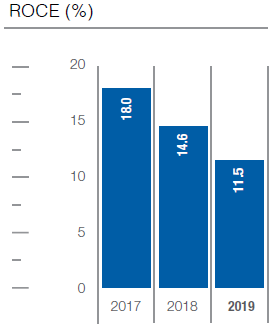 |
Return on average capital employed, or ROCE, is an important measure that assesses long-term profitability by comparing how effectively assets are performing with how these assets are financed
|

|
||||||||
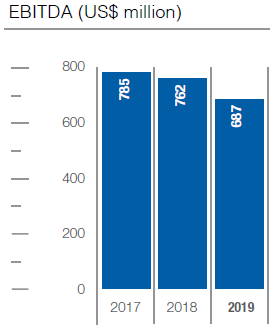 |
EBITDA measures how we performed operationally by excluding the impact of financing, accounting treatments or tax implications
|

|
||||||||
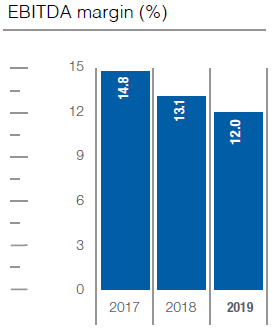 |
EBITDA margin is an important and comparable measure of our profitability (excluding the impact of financing, accounting treatments or tax implications) against our revenue |
|
||||||||
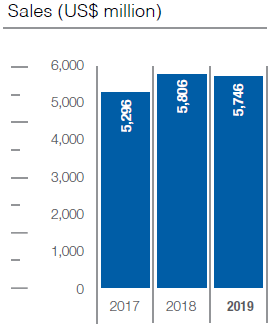 |
While not the only determinant of financial success, sales is a key measure of demand, customer loyalty and a critical contributor to profit |

|
||||||||
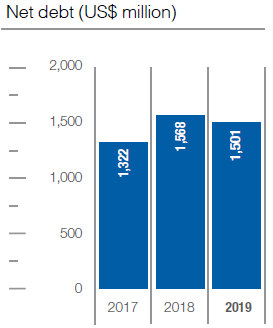 |
Given the capital-intensive nature of our operations, we need to raise debt to complete significant projects that enable our long-term success. Net debt comprises current and non-current interest-bearing borrowings and bank overdrafts (net of cash, cash equivalents and short-term deposits) |

|
||||||||
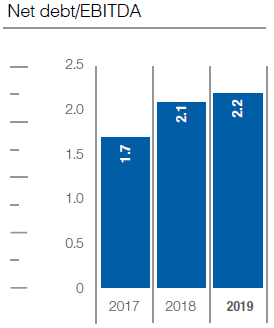 |
The net debt to EBITDA ratio measures our ability to pay off our debt should net debt and EBITDA remain consistent. EBITDA focuses on the operating decisions of a business, as it looks at profitability from core operations before the impact of capital structure
|
|
||||||||
 |
LTIFR is an important measure of our business's safety. We target zero harm and aim to improve LTIFR by at least 10% year-on-year
|

|
||||||||
 |
We rely on a productive and engaged workforce. Employee engagement has been linked to higher safety performance, lower staff turnover, improve productivity and efficiency. We aim to maintain or improve from our 2015 base of 74%
|
|
||||||||
|
We rely on a productive and engaged workforce. Employee engagement has been linked to higher safety performance, lower staff turnover, improve productivity and efficiency. We aim to maintain or improve from our 2015 base of 74%
|
|
||||||||
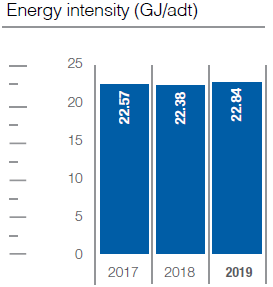 |
Energy intensity is a measure of how efficiently we are operating. By continually improving this metric, we manage costs and lower our impact
|
|
||||||||
 |
We are committed to sourcing woodfibre from forests and timber plantations in a manner that promotes their health and supports community wellbeing
|
|
||||||||


| 1 | For this indicator, we have clear targets for 2020 that we are working towards. See our Group Sustainability Report for more information. |
| 2 | Not measured; survey takes place every second year. |
 Annual Integrated Report