

The clownfish and sea anemone
Neither clownfish nor anemones need each other to survive
but, through mutualism, they thrive better together.
 Group Sustainability Report

 Group Sustainability Report





This report is aligned with our  annual integrated
report and covers the period from the beginning of
October 2018 to the end of September 2019. We
report on a regional and global basis, wherever
possible presenting data over five years to make the
information relevant, accessible and comparable.
Safety, health, environmental and quality (SHEQ)
data is compiled according to international best
practice. Commentary is provided on graphs to
enhance understanding and specific measurement
criteria-as well as instances where these have
changed—are clearly spelled out.
View About this report
The past year was extremely challenging in light of slowing global growth and market volatility, driven by issues like escalating trade wars and Brexit.
View message
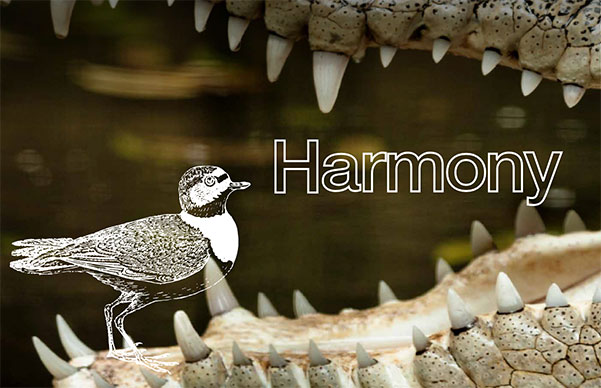
Our theme for this year's report is mutualism, present in every aquatic and terrestrial habitat. Mutualisms are crucial to the reproduction and survival of many plants and animals and to nutrient cycles in ecosystems. In fact, ecologists now believe that almost every species on Earth is involved directly or indirectly in one or more of these interactions.
View message
In line with our 2020Vision and One Sappi strategic approach, in 2015 we established ambitious global sustainability targets. Regional targets are aligned to these goals.
The base year is 2014, with five-year targets from 2016 - 2020. Capital spend budget over five years will be used to determine targets in various elements.
We will be establishing new 2025 targets in 2020, aligned with the United Nations' Sustainable Development Goals.
Certification systems, eg the Forest Stewardship Council™ (FSC™) (FSC; ref FSC-N003159), the Programme for the Endorsement of Forest Certification™ (PEFC™) and the Sustainable Forestry Initiative® (SFI®) are referenced throughout this report, without providing detailed information about each of our operations’ certification status in each instance, to ensure ease of reading.
Certification information for each mill is available on www.sappi.com/certifications

Billion
We follow contemporary 'short scale' convention; defining one billion as one thousand million.
Specific
When data is expressed in specific form, this means that the actual quantity consumed (energy, water, etc) or emitted (emissions, solid waste, etc) is expressed in terms of a production parameter for the period indicated. For Sappi, as with other pulp and paper companies, the parameter is air dry tons (adt) of product.
Tons
We standardise all our reported measurements using the metric ton equivalent to 1,000 kg.
Exchange rates
We have used the following exchange rates:
US$/ZAR: 14.3
US$/EUR: 1.12

Throughout this report, Sappi's regional business units are referred to as:
| SEU | Sappi Europe |
| SNA | Sappi North America |
| SSA | Sappi Southern Africa |

Various websites, research reports, trademarks, registered trademarks and other forms of intellectual property are referenced in this report. All of these, whether marked or unmarked, are without exception acknowledged as the legal property of their owners.